Entrepreneurship has always been about creating value. But now, the questions of who it’s for and how to measure it are being asked in a different way. Impact entrepreneurship puts a social or environmental mission at the core of the business model, not just as an extra piece of the puzzle.
According to the UNDP, a business falls into this category when its mission is a key part of how it’s run, more than half of its revenue comes from selling goods or services, and most of its profits are reinvested into advancing that social mission. Impact isn’t something that happens to the business; it’s what the business exists for.
Based on data from the British Council cited by Katadata, around 342,000 social enterprises were operating in Indonesia as of 2018. Most of these were in the creative economy sector (22%), agriculture and fisheries (16%), and education (15%). These businesses create more job opportunities for women, youth, and local communities than many other sectors. The numbers are significant, yet most of these enterprises still operate without clear regulations, adequate access to financing, or support proportional to the challenges they face.
Why Indonesia Needs to Take This More Seriously
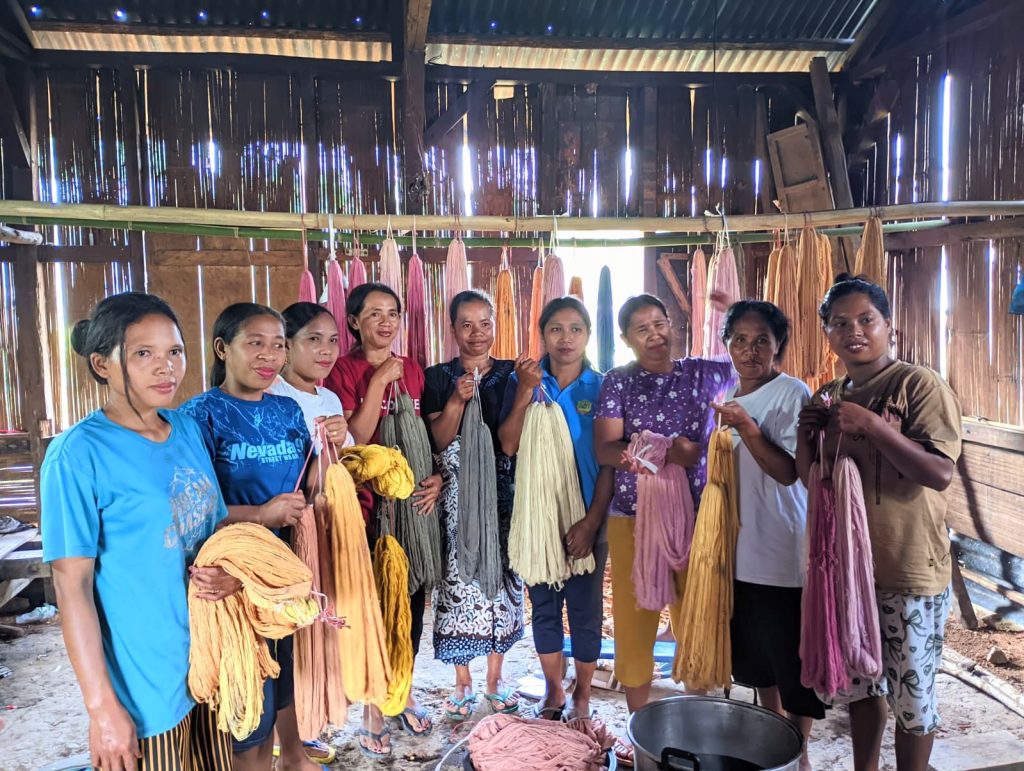
Indonesia is not a country lacking problems that businesses can help solve. Unequal access, environmental degradation, unfair supply chains, and gender inequality in the business world are structural issues that cannot be resolved through top-down policies alone. This is where impact entrepreneurship plays a different role, because it works from within the market rather than outside it.
A study published in a Schmalenbach Journal of Business Research noted that impact entrepreneurs are often more agile in responding to local manifestations of large-scale problems because they are less constrained by institutional norms, more willing to take risks, and closer to the communities directly affected.
In its report Opening Opportunities: The Economic Cost of Gender Gaps in Entrepreneurship in Indonesia (2023), the World Bank noted that Indonesia faces significant economic losses due to gender inequality in entrepreneurship. Indonesian women establish businesses in large numbers, particularly after marriage or having children, with many turning to self-employment after leaving the formal labor market. However, women in business have to deal with limited operating hours, more difficulty accessing capital, and obvious investor bias.
At the same time, Indonesia’s early-stage startup and social enterprise ecosystem still lacks a support infrastructure that’s developed enough. A lot of founders, especially those working in areas like agriculture, community healthcare, or women in value chain development, still don’t have access to mentorship, investor networks, or accelerator programs that understand their local situation. The founders closest to the problems are often the ones furthest from capital and support.
The Ecosystem Is Growing, But Many Are Still Left Behind
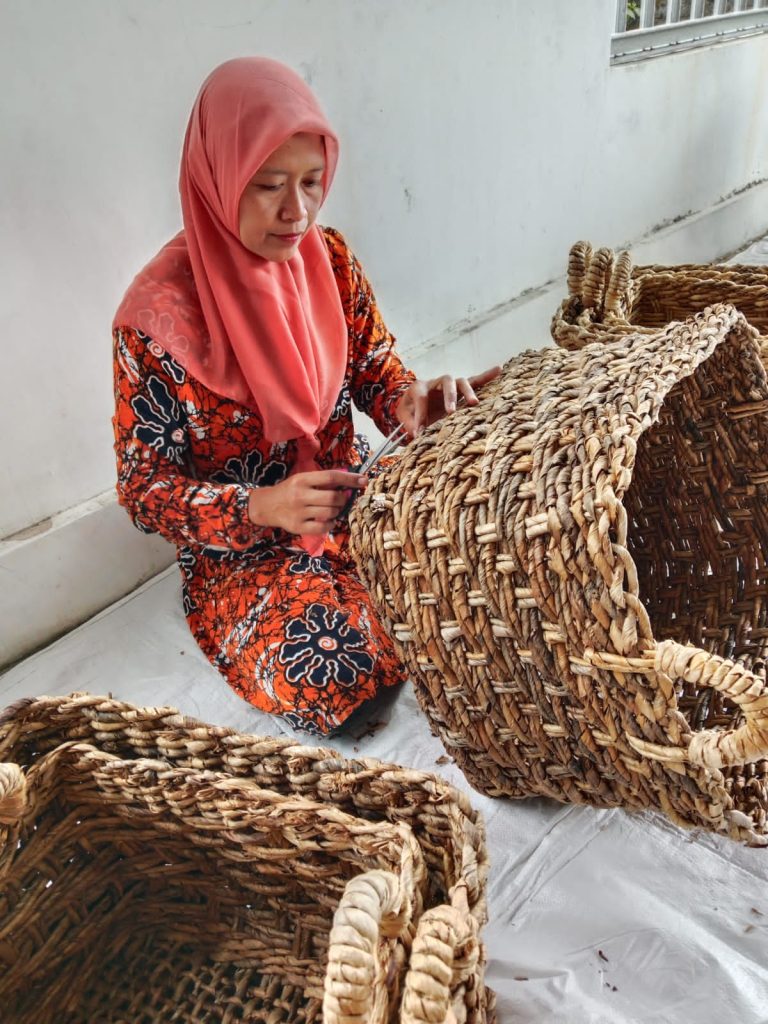
The growth of Indonesia’s social entrepreneurship ecosystem is encouraging, but it’s still something that needs to be followed through on. The number 342,000 is impressive, but it’s important to remember that regulatory support, dedicated financing schemes, and legal recognition for social enterprises are still developing.
The Ministry of Law and Human Rights is pushing to make it legal. They’re doing this with Presidential Regulation No. 2/2022. Their goal is to get the national entrepreneurship ratio to 3.95 percent. This is supposed to help build a better foundation for the whole ecosystem.
The Minister of Manpower also said that an inclusive ecosystem for entrepreneurship is key to achieving economic independence for vulnerable labor groups, including women and youth.
“One successful entrepreneur can create new jobs, stimulate local economies, and drive national growth,” he said during the opening of the Entrepreneurship Service Capacity Building Program for Special Labor Groups at the Center for Job Opportunity Expansion, as quoted by Antara (September 10, 2025).
Data from Statistics Indonesia (BPS) also showed a drop in the open unemployment rate from 4.82 percent to 4.76 percent in February 2025 compared to the same period the previous year, partly due to growth in the entrepreneurial sector.
But to get there, it’ll take a bunch of different folks working together, with each person doing what they do best. To make this happen, the government needs to provide some support through rules and incentives, the private sector needs to help get access to markets and money, and organizations need to help out founders right from the start, when things are still risky.
Two Different Approaches to the Same Problem
One of the approaches currently taking shape in Indonesia comes from Angin Dampak Jaya (formerly ANGIN Foundation/ANGIN Advisory). Its two programs, Pikiran Terbaik Negeri and BUILD, were not designed to address the same problem in the same way, but rather to respond to two different weak points within the same ecosystem.
Pikiran Terbaik Negeri (PTN)
Pikiran Terbaik Negeri (PTN) is a grant competition targeting social enterprises that have moved beyond the MVP stage, operate under a legally registered entity, and work within one of the following six clusters:
- Food security
- Green economy and blue economy
- Healthcare
- Women and youth empowerment
- Waste management
- Digital inclusion
Selected participants receive project implementation grants, two phases of capacity-building bootcamps, technical mentorship from experts across disciplines, access to strategic networks, and scale their business innovations. Over the past two years, PTN has reached tens of thousands of beneficiaries across multiple regions in Indonesia.
Pikiran Terbaik Negeri 2024 received more than 1,000 applicants. From that pool, 20 social enterprises were selected, each receiving a grant of IDR 150 million, bringing the total disbursement to more than IDR 3 billion. Throughout the program, 28,268 people across 11 regions in Indonesia received direct benefits, including students, teachers, healthcare workers, farmers, fishers, and waste collectors.
Pikiran Terbaik Negeri 2025 expanded its reach to 12 regions across Indonesia, with an estimated 5,102 direct beneficiaries. The largest beneficiary groups were children (3,121 people), as well as women and youth (981 people). The program concluded with the Dampak Terbaik Negeri 2025 event in Jakarta on February 13, 2026.
BUILD: Bangun Wirausaha Perempuan Berdaya
While Pikiran Terbaik Negeri operates across sectors and beneficiary profiles, BUILD deliberately takes a narrower focus. Women entrepreneurs in Indonesia becomes the inspiration and design bases of this incubation program. It was drawing from consistent findings in multiple studies, including the World Bank’s 2023 report, which noted that women entrepreneurs face distinct structural barriers. The challenge is not merely the amount of funding available, but also how the ecosystem itself is designed and for whom it is designed. BUILD addresses this gap through three key areas:
- Access to financial capital
- Knowledge through mentorship from industry experts
- Access to regional and national markets
In its first year (2024), BUILD received applications from more than 1,500 women entrepreneurs. From that pool, 20 proceeded to the interview and initial due diligence stage, and 10 were selected as participants. Throughout the program, 8 mentors facilitated more than 120 hours of intensive consultations, with more than 20 strategic partners involved. The program reached 728 direct beneficiaries across Indonesia.
In 2025, BUILD expanded its reach to an estimated 1,248 direct beneficiaries, with the long-term goal of creating a collaborative ecosystem that unlocks the full potential of women-led businesses, including opportunities for vendorship and product co-creation.
The Future of Impact Entrepreneurship of Indonesia
Both programs operate at the same intersection: early-stage entrepreneurship, high-risk environments, and areas often overlooked by larger support mechanisms. The fact that their approaches differ only reflects the complexity of the ecosystem currently being built.
Ultimately, Indonesia’s impact entrepreneurship sector does not lack founders or initiatives. What still needs strengthening is the infrastructure that ensures these actors have the space to grow, fail, and try again, with support proportional to the scale of the problems they are trying to solve.
Referensi
- British Council & International Labour Organization. (2021). Supporting social enterprises in Indonesia. ILO.
- Annur, C. M. (2023, October 15). Kemenkumham Dorong Legalisasi Wirausaha Sosial, Sektor Apa Paling Banyak di RI? Katadata.co.id; Databoks.
- Santika, E. F. (2023, October 15). Wirausaha Sosial Indonesia Semakin Menjamur, Bagaimana Pendapatannya? Katadata.co.id; Databoks.
- PERPRES No. 2 Tahun 2022. (2022). Database Peraturan | JDIH BPK.
- Vogel, A., & et al. (2025). Impact Entrepreneurship: Reimagining Entrepreneurial Purpose and Research for Driving Societal Impact. Schmalenbach Journal of Business Research, 77, 681–717. https://doi.org/10.1007/s41471-025-00221-w
- Youth Social Entrepreneurship – Some learnings for success. (2021, June 21). UNDP.
- Publication: Opening Opportunities: The Economic Cost of Gender Gaps in Entrepreneurship in Indonesia. (2020). Worldbank.org.
- Yassierli. (2025, September 10). Dalam Inclusive entrepreneurship key to economic independence: Minister. Antara News.