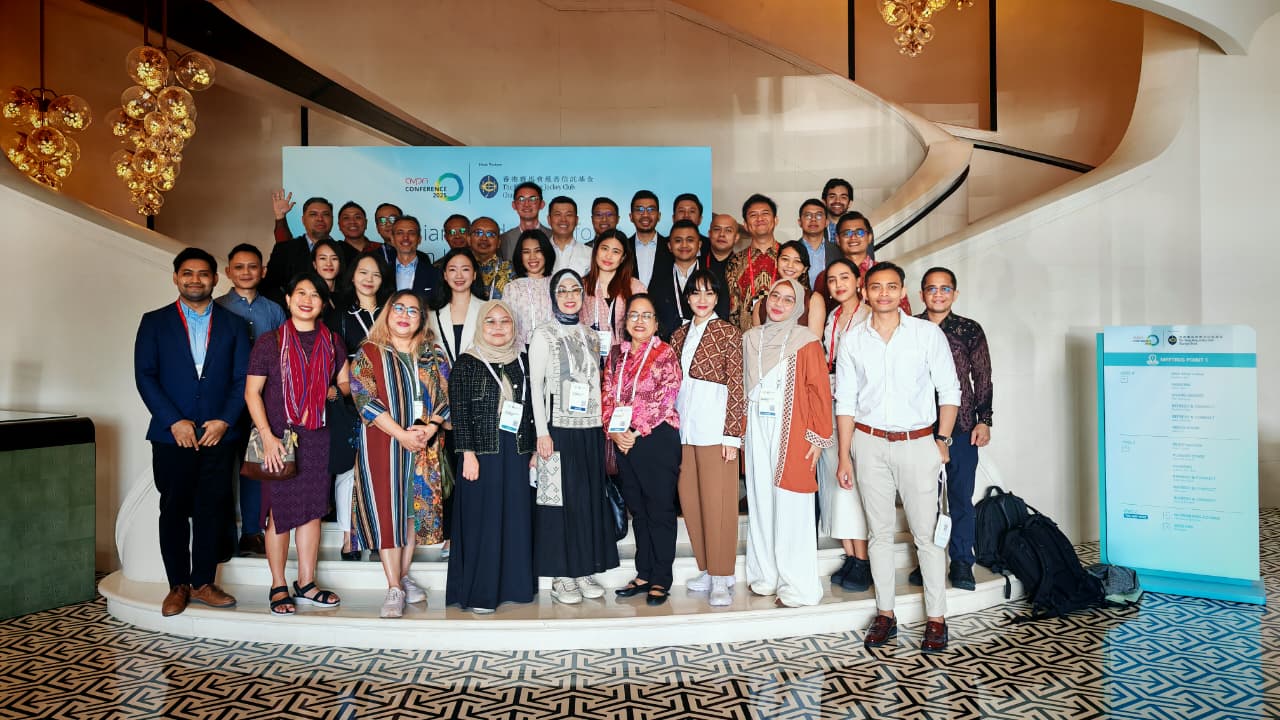
Quentino A. Junandar, Business Development Associate, Angin Dampak Jaya
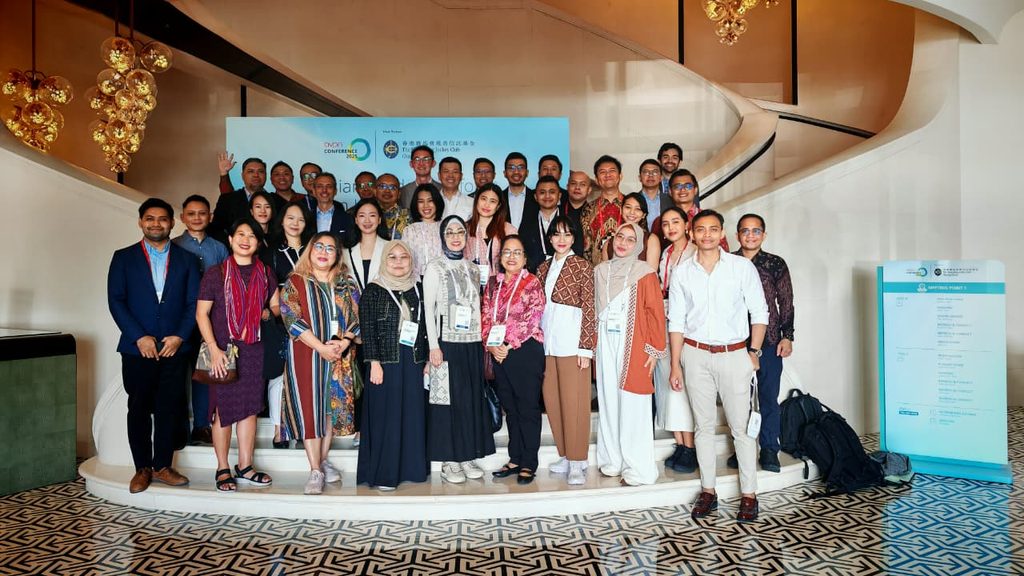
Nearly a year back, attending the Asian Venture Philanthropy Network or AVPN Global Conference 2025 in Hong Kong carried a poignant irony: convening to address impact investing and sustainability just as Tapah, a T8 typhoon, struck the city. Tapah, alongside the super typhoon Ragasa, had been showering Hong Kong throughout September 2025. While these cyclones are recurring natural phenomena, their ferocity has been exacerbated by the climate crisis. Research reports indicate a 7% surge in peak wind velocities and a 13% increase in eyewall precipitation, factors that now account for more than 33% of the total economic devastation across Southern China. These shifts mean that extreme weather events of this magnitude are now expected more frequently than ever before.
This first-hand experience with the ramifications of climate change places the AVPN Global Conference 2025 at the eye of the storm as a vital, convening platform for stakeholders worldwide to engage in meaningful dialogue and collaboration on one of the most pressing issues of our time.
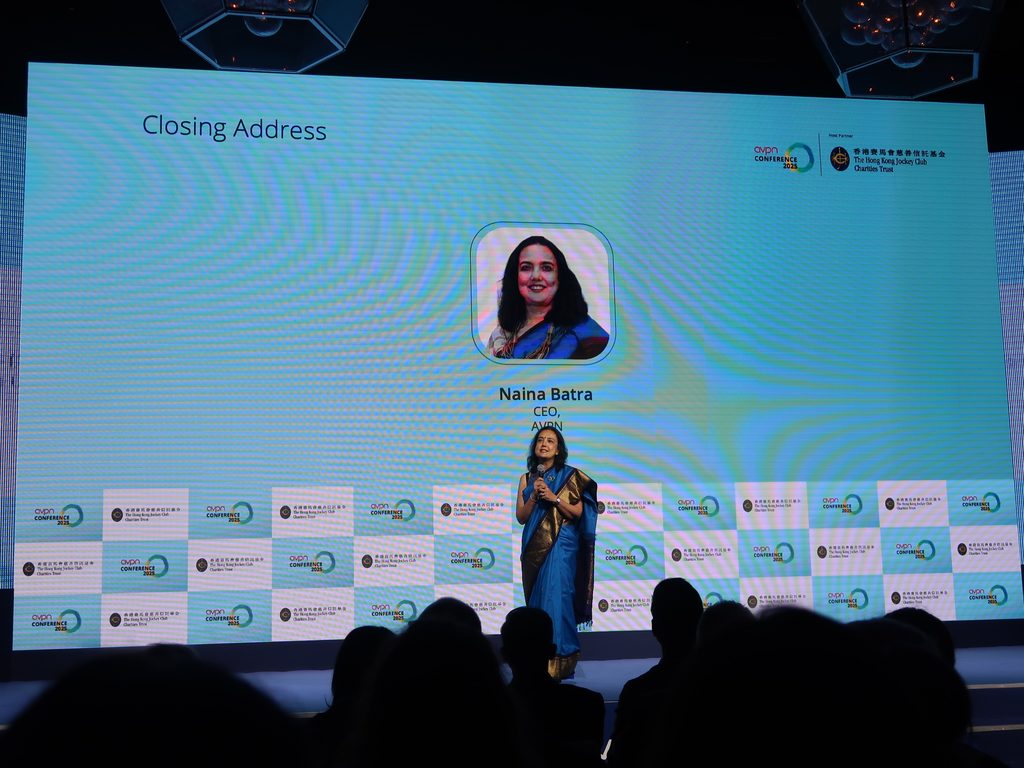
The AVPN Global Conference 2025, themed “Asian Leadership for an Inclusive World,” happened throughout September 9th to 11th, 2025. It explored new verticals, collaboration pathways, and more importantly, a new playbook for impact investing. Spanning a total of $448.2 billion in assets under management in 2025, the impact investment landscape, averaging $1.2 billion USD, remains primarily anchored in high-income regions. These capital flows timed a powerful momentum, shown by a 21% compound annual growth rate throughout the previous six years, a figure that markedly eclipses the marginal 5% expansion seen in total assets during that same period. This sharp trajectory highlighted a paradigm shift where impact-centered capital was no longer a specialized outlier, but it emerged as a leading force in global market evolution, steering investment toward long-term sustainability and systemic resilience.
Here, AVPN sees Asia set to drive over 60% of global economic growth by 2030. Additionally, the conference believes that impact investing is vital for financing Asia’s private sector to address climate change, health access, gender equality, and education. In response to this momentum, Angin Dampak Jaya attended the AVPN Global Conference 2025 to bring evidence-based knowledge and years of experience engaging with social enterprises, startups, and medium, small, micro enterprises (MSMEs) across Indonesia and the region to the table. From the conference, we brought home important learnings, shared experiences, and meaningful connections regarding investing in equity and social inclusion, environmental and sustainability, alongside economic development and leadership.
Rise of Trust-Based Philanthropy
A strong shift is happening in the world of philanthropy and impact investing, driven by what was constantly mentioned throughout the conference as a “crisis of confidence” in old, rigid models. Correspondingly, the most forward-thinking funders have moved away from compliance-driven mindset focused on proving impact with burdensome reports, towards a more dynamic, partnership-based approach focused on improving it. This model, also known as Trust-based Philanthropy, redefines accountability around mutual learning and radical transparency. It empowers on-the-ground partners through flexibility and capital to adapt and innovate. As the saying goes, “If you want to go far, go together.” This was perfectly captured by King Baudouin Foundation’s Chief Programme Officer, Stefan Schafers, who shared that they once had a “best failure” award to create a safe space for grantees to share what didn’t work, fostering genuine collaborative learning.
This signals a crucial evolution in how to approach and engage with funders. The focus has moved from transactional reporting to a trusting, communicative partnership. Micron Foundation’s Director, Antara Lahiri, explained during the AVPN Global Conference 2025 that demonstrating a culture of learning, transparency, and a clear feedback loop within your organization is becoming just as important as the metrics reported. At Angin Dampak Jaya, this rising principle is a powerful validation of our high-touch model. A direct application of these principles that we have championed in our practices for years in our work. An example is our financing arm, Impact Revolve, which provides non-collateral revolving funds based on the trust cultivated after they have completed at least one of Angin Dampak Jaya’s programs or been referred by our partners.
Radical Collaborations as the New Scale
The era of siloed organizations competing to scale their own programs is giving way to an era of radical collaborations. Subhashini Chandran, Mastercard Center for Inclusive Growth’s Senior VP, mentioned that in terms of what we need to unlock capital, we should prioritize networks as it becomes the root of scale. She added that networks can be crystalized as groups or associations to establish an ecosystem that is both complementary and supplementary. Systemic problems require systemic solutions, which can only be achieved through strong public, private, philanthropic partnerships (4P).
In this new landscape, the most valuable players are the “ecosystem orchestrators,” which are neutral, trusted intermediaries who can bridge gaps between these diverse sectors. The ECCA Family Foundation’s Carol Liew’s experience as a Singaporean working in Thailand puts her in the shoes of these intermediaries, calling them “cultural interpreters.” She approached it by setting purpose (and finances) as a “common language” for these diverse partners to align their strategies and create collective impact.
This has set up the north star for most social entrepreneurs and non-profits, which have been actively seeking out and participating in cross-sectoral (and, perhaps, cross-regional) coalitions. This made strong network developments and collaborations no longer a soft-skill, but a core strategic-competency that funders are actively looking for. We fully resonate with this through our strategic partnerships across the impact ecosystem. This includes our active membership in the Earth-Centered Economy Coalition (Koalisi Ekonomi Membumi – KEM) and AVPN, and partnerships with government agencies, including the Environmental Fund Management Agency (BPDLH), Ministry of Micro, Small, and Medium Enterprise, and the Ministry of National Development Planning / National Development Planning Agency (BAPPENAS) to name a few. These partnerships have allowed us to catapult ourselves to reach out and partner with social entrepreneurs in remote areas across the Indonesian archipelago.
Women Entrepreneurs are Here to Stay
A crucial and recurring conversation at the conference was the need for a more nuanced, “gender-intelligent” approach to investment. The consensus was that unlocking the full potential of women-led enterprises, particularly in emerging markets, requires a strategy that goes far beyond simply writing a check. During a closed-door session centered on financing women-led MSMEs, Dr. Peng Zhong, Social Innovation Director at Bayer Foundation, highlighted that providing intensive non-financial assistance, or “hand-holding,” is essential rather than secondary, serving as a core pillar of the overarching investment thesis. This support, spanning from financial literacy to market access and mentorship, is vital for de-risking investments and ensuring women founders have the full suite of tools they need to succeed.
This leads to one thing for funders and ecosystem builders: effective gender-lens investing goes beyond financial capital and doubles-down on human capital. Designing programs that integrate intensive capacity building and mentorship is essential for creating a truly equitable and thriving entrepreneurial ecosystem. This is exactly what Angin Dampak Jaya manifests through our flagship program, BUILD (Bangun Wirausaha Perempuan Berdaya). For its second iteration this year, we have provided a holistic incubation experience that combines grant funding with deep, personalized mentorship and capacity building that we know is critical for strengthening/broadening the number of women involved in various business value chains.
Tomorrow: A Better You, Better Me
It is crucial to recognize that these market-driven shifts are not happening in a vacuum. A significant theme, both at the conference and in Angin Dampak Jaya’s ecosystem, is the increasingly proactive role of the government in laying down the groundwork for impact. In Indonesia, the “policy tailwind” is providing a powerful signal to the market. Clear demand for the vetted, high-impact enterprises supported by organizations like ours is being driven by initiatives such as OJK’s Taxonomy for Indonesian Sustainable Finance (TKBI) and the government’s focus on high-potential sectors like the creative economy, highlighted by former Minister of Tourism and Creative Economy Sandiaga S. Uno. As demonstrated by our numerous regulatory partnerships with the government over the past year, we firmly believe that aligning public policy with private-sector action de-risks investments and accelerates capital deployment to more effectively address the ecosystem’s most pressing challenges.
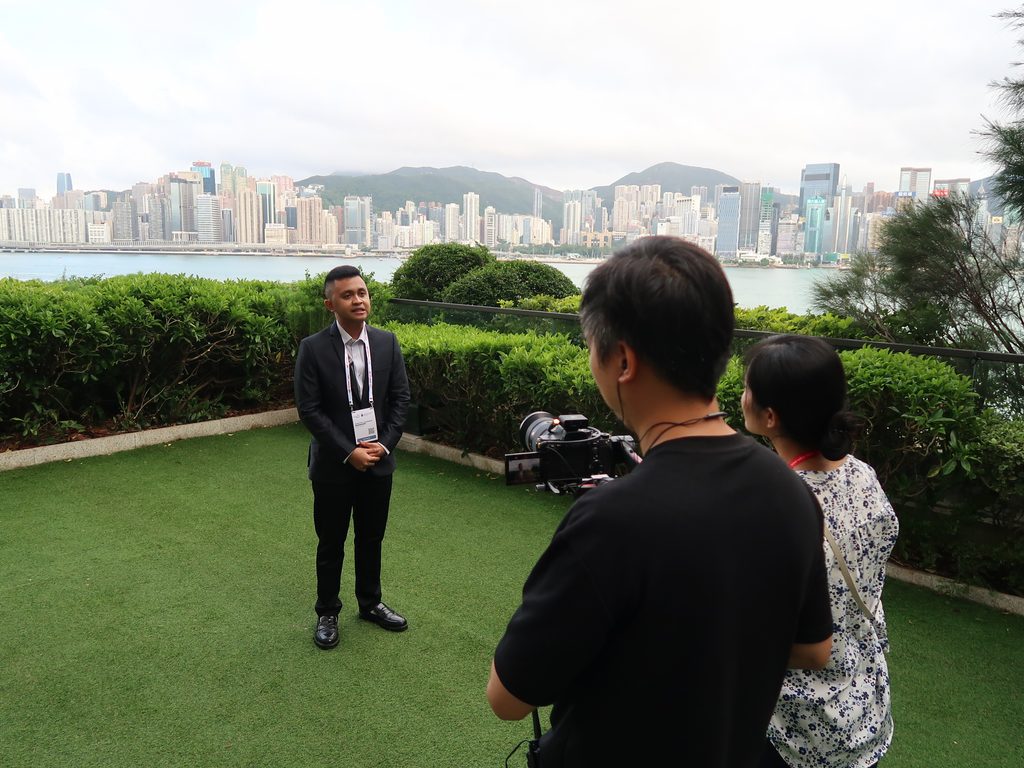
As I left Hong Kong after the AVPN Global Conference 2025, it was deeply encouraging to reflect on the connections forged across these empowering themes with key global stakeholders from all walks of life. Trust has emerged as the core currency enabling the radical collaboration needed to provide the nuanced, human-centered support entrepreneurs need to flourish. The conference reaffirmed that Angin Dampak Jaya is not merely tracking these shifts, but actively shaping this new paradigm in Indonesia, acting as a dependable bridge connecting global capital with local innovation in the years ahead. One thing for sure, the new playbook for impact is still being written, and it is encouraging to know that we are one of the ones to hold the pen.