Consumers who care about the environment are usually willing to pay more for sustainable products. This gap is often exploited through misleading environmental claims, a practice known as greenwashing. Basically, greenwashing is a marketing or communication strategy that makes a product, service, or company appear more sustainable than it actually is. Of all the “green” claims out there, 40% of them aren’t backed by facts.
This term was first used by environmental activist Jay Westerveld in 1986, when he criticized the “Save the Towel” campaign in the hotel industry. Hotels promoted the program as an environmental initiative, but its main goal was actually to reduce laundry costs.
Since then, a lot of similar practices have spread across different industries as the money incentives tied to an “environmentally friendly” image have grown. It’s also important to note that sustainability isn’t just about the environment. It also includes social and economic dimensions. Claims about social responsibility that aren’t true, also known as “bluewashing,” end up in the same category.
Why Companies Use Greenwashing
Some companies do it because they don’t really understand the difference between what’s legitimate and what’s not. Others do it on purpose because of the clear financial benefits involved.
A report by McKinsey & Company found that Gen Z consumers are more likely to choose brands perceived as ethical, while data from Nielsen shows that 66% of consumers are willing to pay more for products from sustainable brands, a figure that rises to 73% among millennials.
Greenwashing itself can happen in two ways. At the corporate level, it’s all about a company’s overall environmental policies and commitments. GE ran its “Ecomagination” campaign to promote its environmental initiatives while also opposing clean air regulations proposed by the EPA.
In the product or service level, greenwashing is when companies make false environmental claims about their products, like ten LG Electronics refrigerator models that used Energy Star certification even though they used too much energy to qualify.
As long as people keep wanting sustainable products and corporate sustainability transparency remains weak, these practices will keep happening.
The Most Common Forms of Greenwashing
In 2009, TerraChoice categorized the seven most common patterns of greenwashing found in the market, known as the Seven Sins of Greenwashing.
- Sin of the Hidden Trade-off
A product is labeled as “green” based on one attribute, while other significant environmental impacts are left undisclosed. For example, a shampoo that’s marketed as organic doesn’t automatically mean it’s eco-friendly if it’s made with hazardous chemicals. - Sin of No Proof
Claims are made without enough evidence or verifiable certification. Companies might say their products are eco-friendly, but they don’t back that up with real data or third-party verification. - Sin of Vagueness
Claims are so general that consumers can easily misinterpret them. “Natural” is a common example, even though substances such as formaldehyde, mercury, and arsenic are also technically found in nature. - Sin of Worshipping False Labels
Products display labels or symbols that look official, but they’re missing genuine third-party endorsement or certification. - Sin of Irrelevance
Claims are made about something that’s already required by law, rather than offering a real environmental advantage. “CFC-free” is a classic example because CFCs have already been banned by law in many countries. - Sin of the Lesser of Two Evils
A product might be technically accurate, but that doesn’t mean it’s good for the environment. Cigarettes that are organic or SUVs that are fuel-efficient fall into this category. - Sin of Fibbing
Making completely false environmental claims, like saying a product has certain certifications when it doesn’t meet the required standards.
Greenwashing Examples From Global Companies
Greenwashing has spread across many industries. It’s more than minor misleading claims; major global corporations have been taken to court for it.
- Volkswagen
Volkswagen ran ads that highlighted how its vehicles don’t pollute much. The company actually put in software that could spot when vehicles were being tested for emissions and automatically dial back the emissions during the test. In conditions outside of testing, the engines put out nitrogen oxide emissions that were up to 40 times higher than the legal limit.
- H&M
H&M promoted its “Conscious” collection as a sustainable fashion option. However, an investigation found that 96% of H&M’s sustainability claims weren’t based on facts. Also, H&M products were some of the five clothing labels most often found in piles of textile waste on beaches in Ghana.
- Nestlé
Back in 2018, Nestlé said it wanted to make all their packaging recyclable or reusable by 2025, but it didn’t set any clear goals or give a timeline. Then, in 2020, Nestlé was listed among the world’s largest plastic polluters for the third year in a row, along with The Coca-Cola Company and PepsiCo.
- Poland Spring
Poland Spring used packaging with pictures of forest springs and said their water was “100% natural spring water.” The truth is, bottled water products have been found to contain microplastics, and more recent studies have even found nanoplastics, which are even smaller pieces of plastic. Most of these nanoplastics end up in the water during the bottling and purification processes. Poland Spring, along with Evian and Fiji Water, ended up in lawsuits over greenwashing ads.
- Walmart
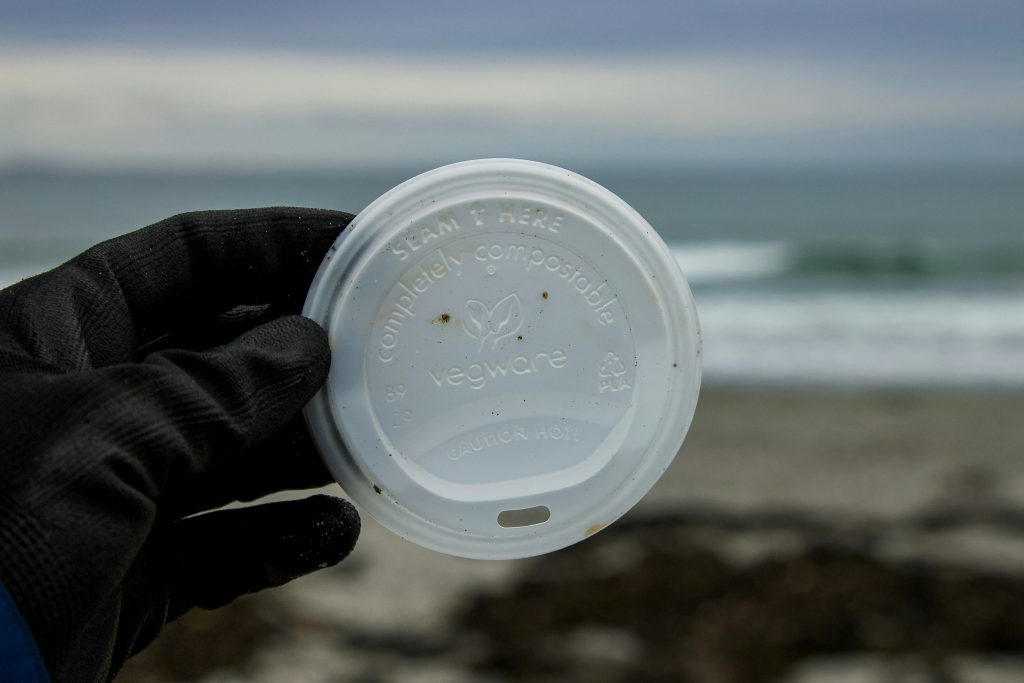
Walmart sold a bunch of plastic products that were labeled as “environmentally friendly,” but it turned out these claims were misleading. Back in 2017, the company paid USD 1 million to settle the allegations. In California, there’s a law that says “compostable” or “biodegradable” plastics can’t be sold unless there’s a clear disclaimer about what conditions are needed for them to decompose.
Why Greenwashing Is Harmful
Greenwashing makes it seem like companies are already doing their part for the environment. This means that public pressure for real change is going down, as well as the push for stricter government regulations. In reality, global emissions need to be reduced by nearly half by 2030 and reach net zero by 2050.
For consumers, the harm is immediate. Many eco-conscious consumers are willing to pay more for products marketed as eco-friendly, even though the business practices haven’t changed. When these things come to light, people stop trusting the company. People who feel tricked are likely to be skeptical of all sustainability claims, even the legit ones from other companies. They might even stop looking for eco-friendly options.
This also has an impact on companies that are actually making an effort to be sustainable. When green claims are everywhere, but there aren’t clear standards, consumers don’t have a reliable way to tell the difference between real commitments and just marketing strategies.
How to Recognize Greenwashing
Greenwashing meaning goes beyond false labels. Even if it’s designed to be hard to spot, there are signs of greenwashing that consumers can look for to verify whether a company or product’s sustainability claims are true.
- Look for Specific and Verifiable Claims
Claims such as “100% recycled materials” are easier to verify than vague labels like “eco-friendly” or “natural,” which have no standardized definition. - Check for Credible Third-Party Certifications
In the U.S., the EPA recognizes a bunch of trusted ecolabels, like EPEAT, Green Seal, GreenCircle Certified, and Safer Choice. Just because a label or certification looks official doesn’t mean it’s legit. - Examine the Company’s Overall Track Record
Independent sustainability reports and evaluations from watchdog organizations offer a more objective view than the company’s own marketing materials. - Assess Corporate Transparency
Check if a company is being transparent about the negative impacts of its operations. Companies that only talk about the good stuff and don’t mention the bad stuff should be looked at more closely.
As long as standards, regulations, and public awareness remain weaker than the “green” ambitions promoted by companies, the gap between claims and reality will continue to persist.
Reference:
- Kusuma, N. (2023, July 4). Kenalan dengan Greenwashing dan Cara Menghindarinya. Green Network Asia – Indonesia.
- Greenwashing – the Deceptive Tactics behind Environmental Claims. (2025). United Nations.
- Robinson, D. (2022, November 13). Greenwashing: What is it, why is it a problem, and how to avoid it. Earth.org.
- Aparna, P., & Siva Murugan, K. (2024). Green washing: A deceptive marketing practice and its implications. In Proceedings of the 3rd International Conference on Reinventing Business Practices, Start-ups and Sustainability (ICRBSS 2023) (pp. 122–132). Atlantis Press. https://doi.org/10.2991/978-94-6463-374-0_12
- Francis, T., & Hoefel, F. (2018). “True Gen”: Generation Z and Its Implications for Companies. McKinsey & Company.
- Joshua. (2020). 66% of Consumers Willing to Pay More for Sustainable goods, Nielsen Report Reveals. ashtonmanufacturing.com.au.
- Robinson, D. (2022, July 17). 10 Companies and Corporations Called out for Greenwashing. Earth.org.
- Boyle, K. (2025, March 20). How to Spot Greenwashing. Bard.edu.
- Pryor, E. (2024, December 2). What is greenwashing? Greenpeace.org.